


Summer in Texas brings long days, high temperatures, and plenty of sunshine—but it also creates serious challenges for poultry. Chickens are surprisingly sensitive to heat and cannot cool themselves the way people can. As temperatures climb, it’s important to help your flock stay comfortable and avoid heat-related illness.
Provide Plenty of Fresh Water
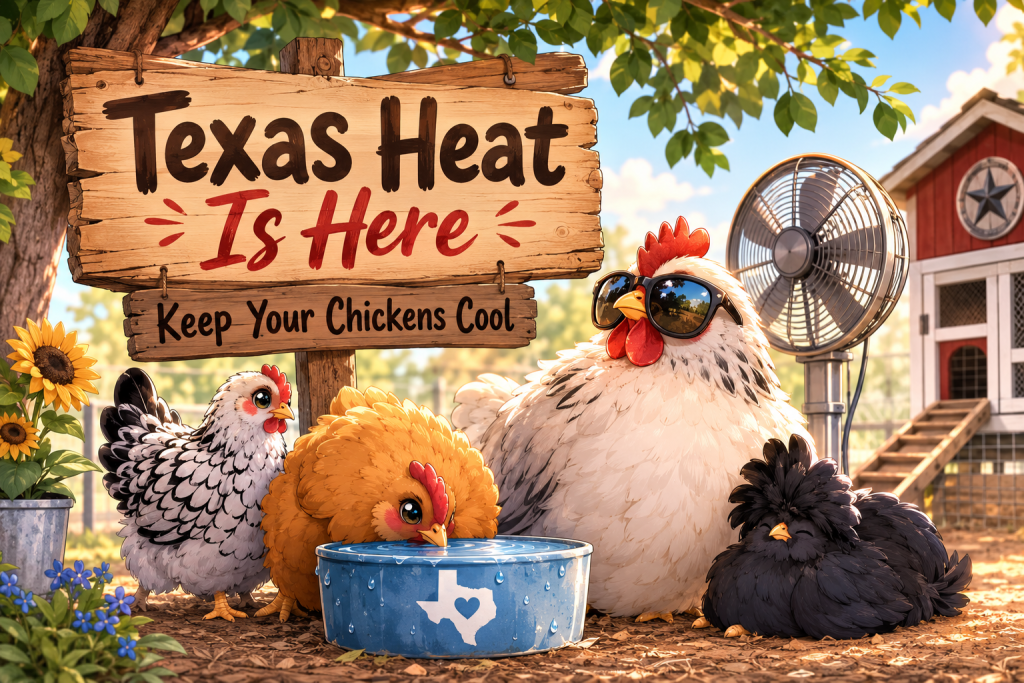
Water is your flock’s first line of defense against the heat. Check waterers several times each day to make sure they are full, clean, and cool. Place them in shaded areas whenever possible, and consider adding extra water stations so every bird has easy access.
On especially hot afternoons, replacing warm water with fresh, cool water can encourage birds to drink more and stay hydrated.
Make Shade a Priority
Chickens need a place to escape direct sunlight throughout the day. Trees, shade cloth, tarps, or well-designed coops with covered runs can all help reduce heat stress. If your birds spend time in portable pens or tractors, move them regularly so they always have access to shade.
Keep Air Moving
Good airflow is essential during the summer months. Open windows, vents, and doors to improve natural ventilation while still keeping predators out. Fans can also help move hot air through a coop, but remember that fans cool birds by improving airflow—they do not lower the actual air temperature.
Offer Cooling Treats
Frozen fruits and vegetables can provide both hydration and enrichment. Watermelon, cucumber, berries, peas, and other poultry-safe treats can be chilled or frozen before feeding. Treats should always be offered in moderation and should never replace a balanced poultry ration.
Reduce Heat Inside the Coop
Dark roofs and enclosed buildings can trap significant amounts of heat. Whenever possible, increase ventilation, provide shade over the coop, and remove unnecessary sources of heat. Avoid overcrowding, as birds packed too closely together have a harder time staying cool.
Watch for Signs of Heat Stress
Knowing what to look for can help you respond before a bird’s condition becomes critical. Common signs include:
- Panting or rapid breathing
- Holding wings away from the body
- Lethargy or reduced activity
- Pale combs and wattles
- Loss of appetite
- Weakness or difficulty standing
If a bird appears to be overheating, move it to a cool, shaded location immediately. Offer cool (not ice-cold) drinking water and improve airflow around the bird. If symptoms are severe or do not improve, contact a veterinarian experienced with poultry.
Plan Ahead for Extreme Heat
When temperatures are expected to be exceptionally high, complete chores early in the morning or later in the evening when conditions are cooler. Minimize handling birds during the hottest part of the day, and postpone unnecessary transportation whenever possible.
For youth exhibitors preparing birds for upcoming shows, maintaining hydration, minimizing stress, and providing proper ventilation are especially important during the Texas summer.
Keeping chickens healthy during hot weather comes down to preparation and observation. By providing fresh water, shade, good airflow, and close daily monitoring, you can help your flock remain healthy, comfortable, and productive throughout the summer.
This article was written by the Texas Junior Exhibition Poultry Club to provide general educational information for poultry exhibitors and backyard flock owners. We appreciate the many poultry educators and experienced breeders, including Albritton Farms, who help share knowledge that benefits the poultry community.